

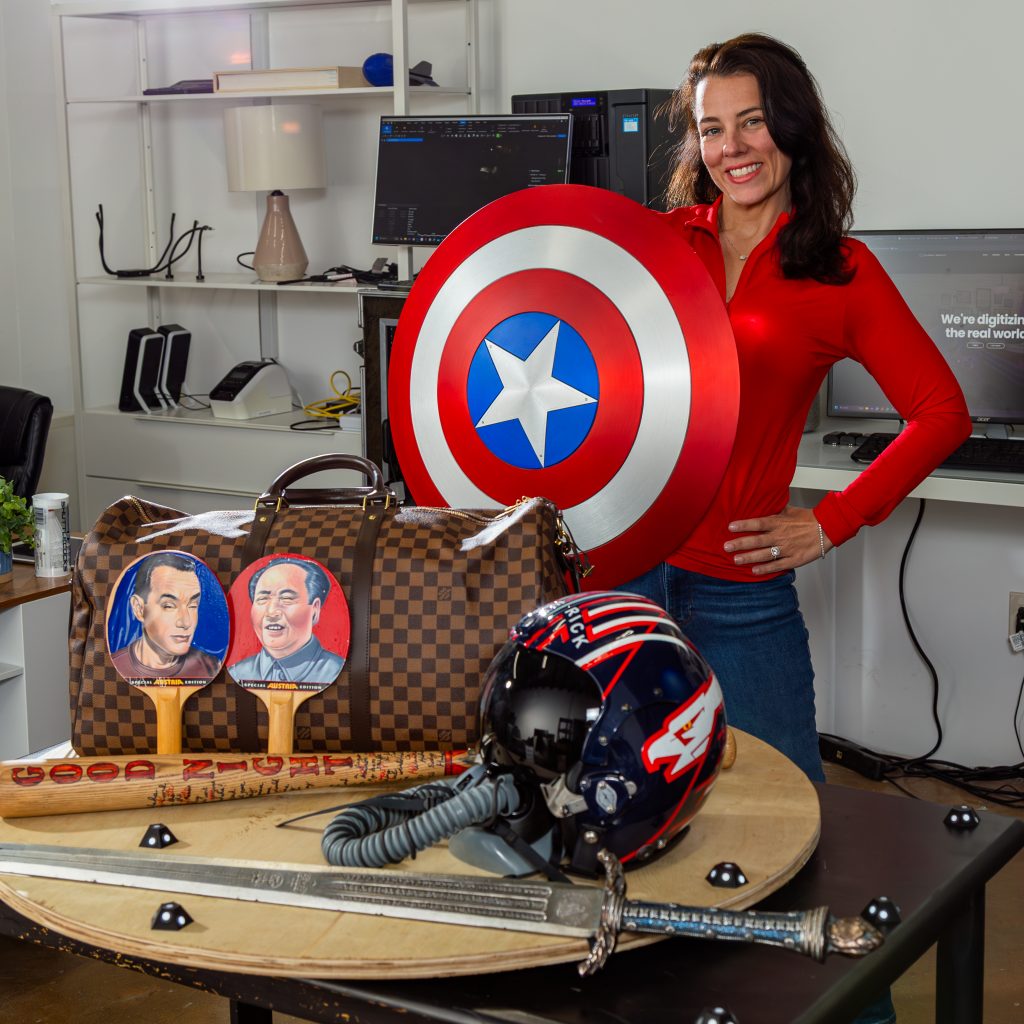
From digitizing iconic film artifacts to exploring emerging technologies like Neural Radiance Fields and Gaussian Splatting, Loren’s work bridges the worlds of artistry and deep technology. Her mission goes beyond innovation—it’s about building a cultural archive for the digital age while opening doors for more diverse voices to shape the future of media.
In this Women in AI Spotlight interview, Loren shares her journey, her vision for spatial AI, and why this moment represents an unprecedented opportunity for women in the technology and filmmaking industries.
From Storytelling to Spatial Intelligence
Q: As CEO of Global Objects, you operate at the intersection of AI, 3D capture, and cinematic production. What originally drew you to this convergence of art and deep tech?
Jess Loren:
I actually came into this world through storytelling. My career began in traditional production and visual effects, where I spent years watching artists and technologists collaborate to build worlds. The intersection where creativity meets engineering has always fascinated me.
When I started working with virtual production technologies and high-fidelity scanning, it became clear that we were approaching a new era. We were no longer just creating visual effects for a single film—we were capturing reality itself in a way that could live on as data. That realization was incredibly powerful.
At Global Objects, we’re essentially building a library of the world in cinematic quality. The convergence of AI, spatial capture, and storytelling means these assets don’t just sit in an archive—they become living building blocks for future stories, simulations, education, and experiences.
For me, it’s the ultimate challenge: preserving culture, empowering creators, and building the infrastructure for the next generation of storytelling.
Demystifying the Technology
Q: You’re working at the edge of Gaussian Splatting, Neural Radiance Fields, and AI-ready digital twins. For women who may feel intimidated by the technical language—how do we demystify it and invite more women into these rooms?
Jess Loren:
The first step is realizing that the language often sounds scarier than the reality. Terms like Neural Radiance Fields or Gaussian Splatting are simply describing new ways computers understand light, geometry, and space.
At the end of the day, what we’re doing is teaching machines to see and recreate the physical world with incredible accuracy. You don’t need to be a mathematician to contribute meaningfully to that ecosystem. These technologies need producers, storytellers, designers, archivists, ethicists, and entrepreneurs.
One of the things I often tell women entering this space is: don’t wait until you understand everything before you walk into the room. The people building the technology are figuring it out in real time too. The more diverse the people shaping these tools, the more interesting and responsible the outcomes will be.
Moving from Images to Worlds
Q: How does high-fidelity spatial data fundamentally change the way generative models behave, and why does that matter creatively?
Jess Loren:
Most generative models today are trained primarily on images or text. That’s powerful, but it’s also fundamentally limited because the world isn’t flat.
When you introduce high-fidelity spatial data—with accurate geometry, lighting behavior, scale, and physical relationships—you’re giving generative systems a much deeper understanding of reality. Instead of guessing how a scene should look, the model can actually reason about how light moves through a space or how objects interact in three dimensions.
Creatively, that’s a massive shift. Filmmakers, game developers, architects, and designers can start collaborating with AI in a way that feels grounded in the physical world rather than purely synthetic.
In other words, we move from generating pictures to generating worlds.
Women in AI and VFX: Progress and Opportunity
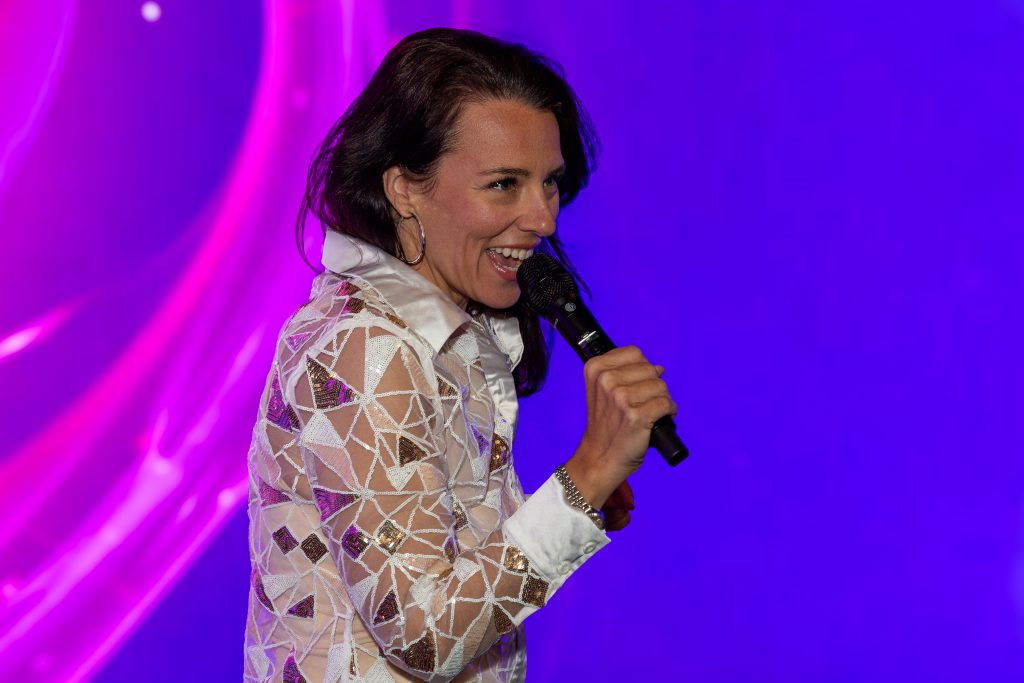
Q: You sit on the Television Academy’s Special Visual Effects Peer Group Executive Committee and the Visual Effects Society’s Global Board. Where are women gaining ground in AI and VFX—and where do gaps remain?
Jess Loren:
Visual effects has historically been a bit of a boys’ club. That’s just the honest reality of how the industry developed over the last few decades.
From my perspective serving on the Special Visual Effects Peer Group Executive Committee at the Television Academy and on the Visual Effects Society’s Global Board and Los Angeles Local Board, gaps in access are still quite prevalent at all levels of the pipeline and in leadership.
At the Television Academy specifically, there has actually never been a female governor for the Special Visual Effects Peer Group. I ran for the position because representation at that level matters. It’s not just about participation—it’s about influence and representing the full breadth of the communities these groups serve.
What’s exciting right now is that AI represents a completely new frontier. Unlike traditional VFX pipelines, AI is an open field. There aren’t “lifelong specialists” yet—everyone is learning in real time.
That creates an incredible opportunity for women to enter the space now and help shape how these technologies evolve.

Preserving Cultural Artifacts in the Age of AI
Q: Global Objects is digitizing iconic, screen-used assets from franchises like Captain America, Top Gun: Maverick, Wonder Woman, and Suicide Squad. What responsibility comes with transforming cultural artifacts into AI-ready datasets?
Jess Loren:
There’s a real responsibility that comes with digitizing cultural artifacts, especially ones that hold emotional significance for audiences around the world.
When we scan something like a screen-used prop or an iconic environment, we’re not just capturing geometry—we’re preserving a piece of storytelling history. That data can live for decades, potentially outlasting the original physical object. In many ways, we’re acting as archivists for the digital age.
So we approach it with the mindset of cultural preservation, not just technical capture. That means working closely with rights holders, documenting provenance, and ensuring the data is treated respectfully and responsibly as it enters AI training pipelines or creative workflows.
A Message for the Next Generation
Q: If this spotlight article reaches one young girl curious about AI and film, what would you want her to know?
Jess Loren:
I would want her to know that this industry desperately needs her perspective.
Technology and storytelling are both shaped by the people building them. If only one type of person is creating the tools, then the stories those tools enable will reflect that limited viewpoint.
Curiosity is the most powerful qualification you can have. If you’re fascinated by how things work—how movies are made, how worlds are built, how computers understand images—then you already belong in this space.
The next generation of filmmaking won’t just be directors and cinematographers. It will include spatial designers, AI collaborators, and digital world builders.
There’s room for all of us.
The Power of the Cloud
Q: When high-performance GPUs, photoreal 3D capture, and generative tools are accessible through cloud studios instead of physical infrastructure, what new possibilities open up for female founders and filmmakers?
Jess Loren:
Cloud infrastructure is one of the biggest equalizers we’ve ever seen in media technology.
Historically, building high-end visual effects or virtual production capabilities required enormous capital—physical stages, render farms, proprietary hardware. That greatly limited who could participate.
Now we’re seeing a shift where many of those capabilities can exist in the cloud. High-performance GPUs, real-time engines, and AI tools can be accessed from anywhere in the world.
For founders and filmmakers—especially women who may not have historically had access to large institutional funding—that’s transformative.
The next groundbreaking studio might start from a laptop instead of a physical lot. Creative leadership can come from anywhere, not just traditional power centers.
And most importantly, that democratization of infrastructure is going to unlock voices and stories we haven’t heard yet.
Watch Jess Loren
Connect with Jess Loren
-
- LinkedIn: https://www.linkedin.com/in/jessloren/
-
- Instagram: https://www.instagram.com/msjessloren/
-
- Facebook: https://www.facebook.com/MsJessLoren/
To find out more about the Power of AI cloud check out the links below.