

The next wave of realtime environment creation is arriving faster than ever—and SIGGRAPH audiences have a rare, live-streamed opportunity to see Daniel Langhjelm, CGPro instructor and Unreal environment expert, transform real-world locations into fully interactive, photoreal digital worlds using cutting-edge Unreal Cloud Gaussian splatting workflows.
What You’ll See in the Session
Get ready to dive into a full scan-to-Unreal workflow where every step is live and in action. Highlights include:
- StoryEngine Spatial Capture: See the scanned data seamlessly imported and processed in the StoryEngine platform to create dense, accurate 3D point clouds.
- Gaussian Splat Cloud Processing: Learn how raw spatial data is transformed into high-fidelity Gaussian splats, preserving subtle lighting and surface detail.
- Play Canvas SuperSplat Cleanup & Optimization: Daniel refines the dataset in realtime, removing noise, optimizing splat density, and preparing it for Unreal Engine.
- Unreal Engine Realtime Cloud Exploration: Experience the environment inside Unreal Engine using the LCC SDK, including dynamic interaction with characters, lighting, and cinematic setups.
- Cloud-Powered Workflow: Witness the full process running on a CenterGrid Virtual Studio M4 Raptor with 64 cores, 128 GB RAM, 1 TB storage, and an RTX A6000 GPU with 48 GB VRAM—all remotely in the cloud.
Every stage demonstrates how real-world locations can move from scan to interactive Unreal Engine environment in hours rather than weeks.
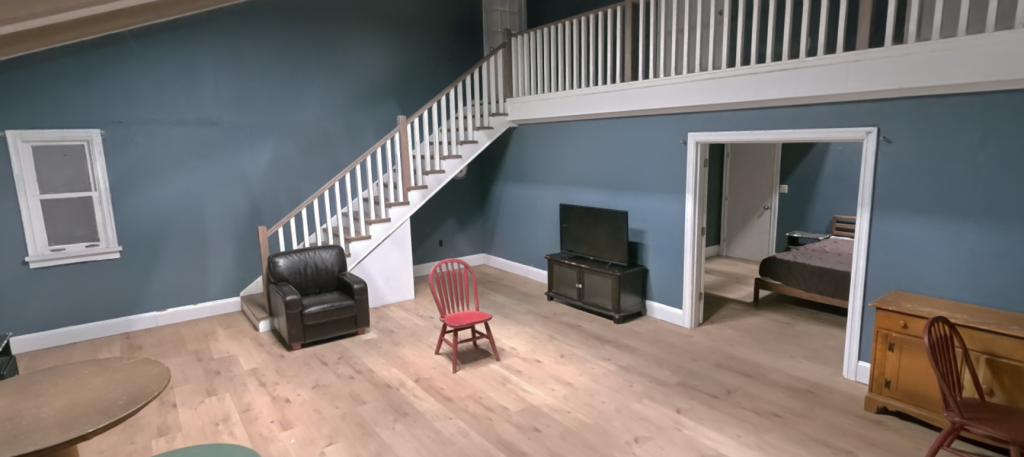
From Real-World Capture to Digital Environments
Langhjelm’s presentation will walk through a complete Gaussian splatting workflow—from physical environment capture to realtime visualization inside Unreal Engine.
The demo begins with a location captured using the StoryEngine spatial capture platform, which combines imaging and LiDAR scanning using XGRIDS technology. The portable XGRIDS scanner allows teams to quickly capture accurate spatial data from real-world environments, generating detailed point clouds and imagery that can be reconstructed into dense 3D datasets.
These captures serve as the foundation for creating Gaussian splats, a modern rendering approach that represents scenes using millions of small volumetric points instead of traditional polygon meshes. This technique preserves subtle lighting and surface detail while enabling highly efficient realtime rendering.
Daniel Langhjelm, a CGPro instructor and Unreal environment expert, guides each step, ensuring the dataset maintains photorealism while being optimized for realtime Unreal Engine use.
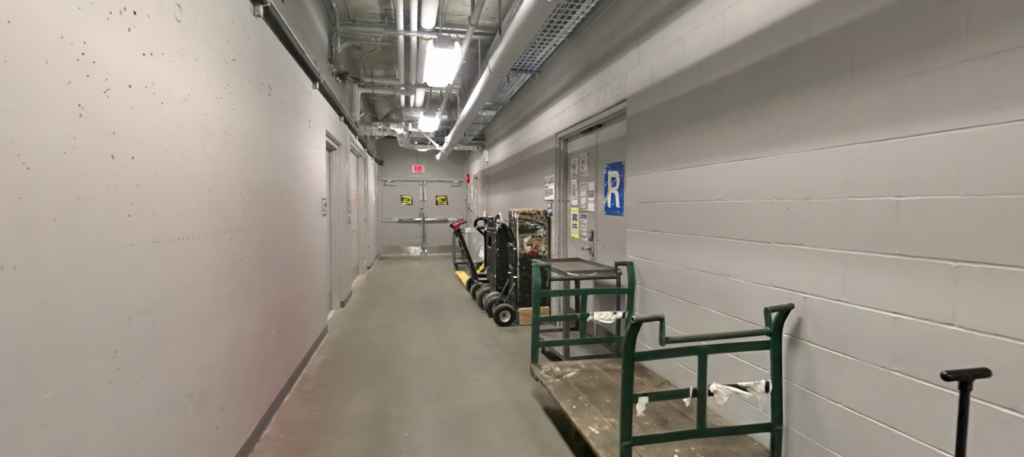
Processing Gaussian Splats in the Cloud
Rather than processing the dataset on a local workstation, Langhjelm will perform the entire workflow using a virtual machine running inside CenterGrid’s Virtual Studio cloud infrastructure.
This approach demonstrates how artists can work with heavy spatial datasets remotely, accessing powerful GPU resources through the cloud. By using CenterGrid’s Virtual Studio environment, complex tasks such as splat processing, optimization, and realtime visualization can be performed from standard laptops or remote workstations.

CenterGrid Virtual Studio Cloud Workflow
The entire session runs on CenterGrid’s Virtual Studio M4 Raptor, a high-performance cloud workstation with:
- 64 CPU cores
- 128 GB RAM
- 1 TB storage
- RTX A6000 GPU with 48 GB VRAM
This machine allows processing and Unreal Engine visualization of massive datasets remotely—a workstation that would cost around $18,000 if purchased locally.
Refining the Scan with SuperSplat
After the initial processing step, Langhjelm will demonstrate how the dataset can be refined using SuperSplat, a tool designed specifically for editing and optimizing Gaussian splat data.
Raw capture data often contains noise, stray points, and artifacts from the scanning process. SuperSplat allows artists to clean up and refine the splat dataset by removing unwanted geometry, adjusting density, and optimizing the dataset for realtime rendering.
This cleanup stage ensures the captured environment remains visually rich while maintaining performance when viewed inside realtime engines.
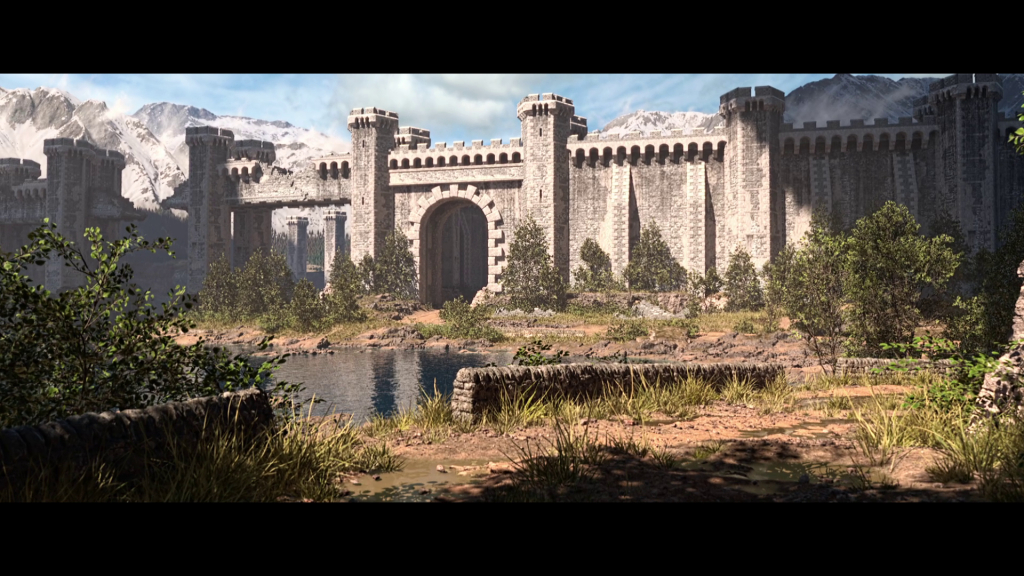
Visualizing the Environment in Unreal Engine
Once refined, the dataset streams directly into Unreal Engine via the LCC SDK, where artists can explore, interact, and integrate the environment with characters, lighting, and cinematic tools.
This hybrid workflow demonstrates how spatial capture, AI-assisted reconstruction, and realtime engine technology converge to create efficient and photoreal production pipelines.
A New Frontier for Unreal Engine Worldbuilding
Langhjelm’s Encore session reflects a broader shift across the VFX, animation, and virtual production industries. Instead of building every environment manually, artists are increasingly starting with captured real-world locations, refining them with AI and specialized tools, and deploying them inside Unreal Engine.
By combining StoryEngine spatial capture workflows, XGRIDS LiDAR scanning, Gaussian splat creation, SuperSplat refinement, and Unreal Engine visualization, all powered by CenterGrid Virtual Studio cloud infrastructure, this pipeline demonstrates how modern technologies are enabling faster, more accessible, and globally connected worldbuilding.
This rare live-streamed Encore session gives attendees a front-row seat to the future of Unreal Engine production, showing how physical environments can move from capture to fully interactive, photoreal digital worlds in just hours—processed entirely in the cloud.
Find out more about Vritual Studio and CenterGrid check out the links below.